Commercial cleaning and food safety professionals in Brampton support food establishments, commissaries, bakeries, warehouses, and mobile food services staying compliant. They sanitize regularly touched surfaces, food preparation surfaces, equipment, floors, drains, restrooms, and food handling spaces with approved chemicals, at correct dilution, and documenting contact times. You require scheduled cleaning based on risk, food throughput, allergens, and regulatory assessments, plus verification records that support Hazard Analysis Critical Control Points, quality reviews, and public health compliance. The sections below explains how effective cleaning systems must contain.
Main Points
- Food safety cleaning technicians from Brampton work with restaurants, grocery departments, commissaries, warehouses, bakeries, schools, mobile vendors, and allergen-sensitive operations.
- Cross-contamination elimination is accomplished by cleaning high-touch surfaces, food-contact equipment, kitchens, floors, drains, restrooms, and storage areas with zone-based workflows.
- Confirmation of approved sanitizer dilution, appropriateness, and contact time is conducted by trained vendors, with conclusion recorded using swabs, reviews, and action records.
- Routine, recurring, and periodic activities designated by area form hygiene schedules built on threat, throughput, changeovers, incidents, and guidelines.
- Coverage, color-categorized instruments, hazard analysis knowledge, public-health knowledge, WHMIS instruction, credentials, and audit-ready sanitation paperwork are important provider traits.
Food Safety Cleaning Requirements for Brampton Operations
Brampton establishments that deal with, maintain, prepare, package, or provide food require food sanitation. Implement it if your business is falls under public health inspections, food codes, or HACCP requirements. The mandate covers restaurants, cafeterias, commissaries, grocery food departments, butcher shops, seafood counters, convenience stores, and institutional kitchens.
You also need documented food sanitation in storage facilities, food production centers, refrigerated locations, bakery retailers, school meal programs, event venues, and food distribution hubs. Mobile and seasonal operations count too, including mobile kitchens, festival sellers, and temporary food stands. If your staff prepare raw materials, portion finished foods, warm up meals, or maintain allergen storage, your facility needs established sanitation documentation. In Brampton, hygiene isn't optional; it's part of legal, operational, and consumer protection compliance.
What Do Brampton Cleaning Experts Clean?
You need cleaning experts who sanitize high-touch surfaces, kitchens, floor surfaces, and restrooms to comply with food safety and health regulations. They target these areas because they pose the greatest danger for contamination spread, slipping risks, and sanitation breaches.
Knowing their service areas enables you to validate your operation's sanitation satisfies required standards and regulations.
Critical High-Touch Surface Sterilization
base cleaning intervals based on usage patterns, exposure levels, and facility operations.
testing surfaces to validate cleaning results
Cooking Zones, Walking Surfaces, and Restroom Environments
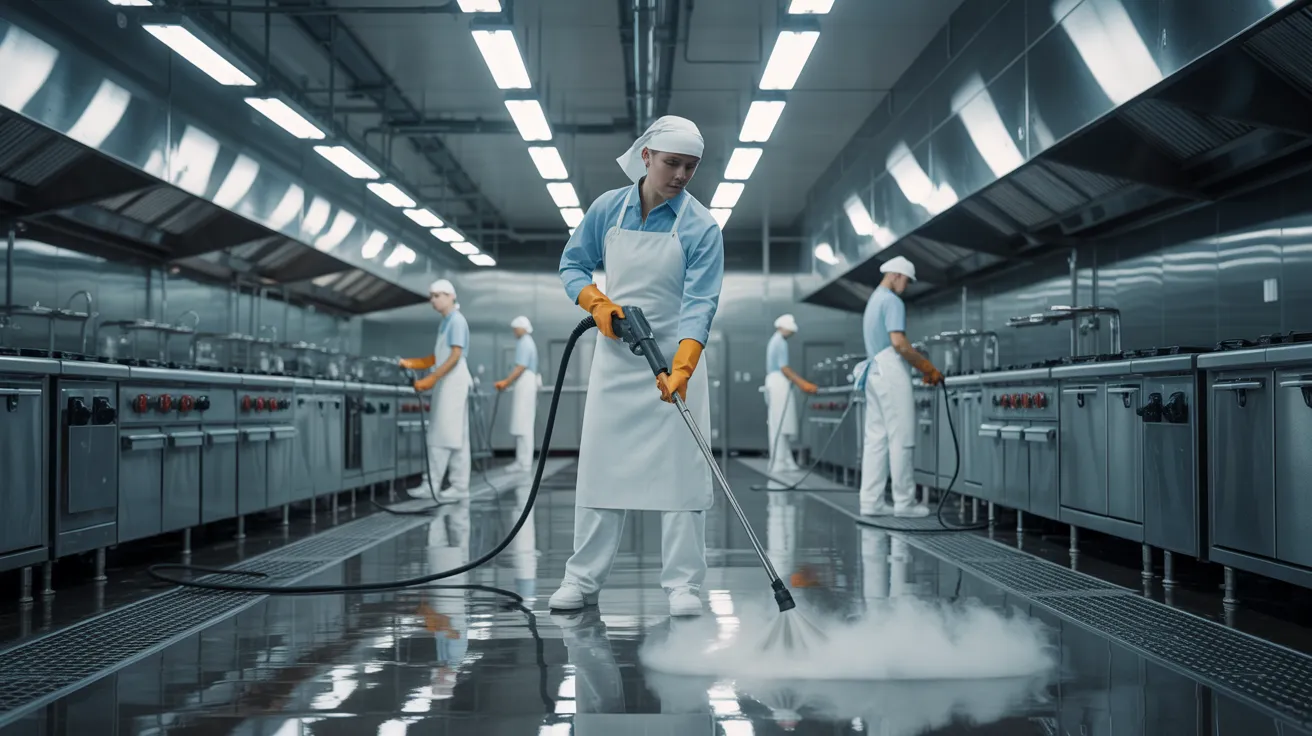
Brampton cleaning professionals will address kitchens, floors, and restrooms since each space presents different hygiene concerns, slip-and-fall, and community health challenges. In industrial kitchens, you need degreasing on cook lines, equipment exteriors, drains, prep surfaces, and splash zones to minimize bacterial growth and pest activity.
Floor care that is documented should equally be anticipated. Technicians scrub and extract buildup from tile grout, ceramic surfaces, and vinyl floors, then apply appropriate drying controls so you can limit falls and meet regulatory standards. They also address entryways where moisture and debris migrate indoors.
Restroom cleaning requires decontaminating touch areas, bathroom equipment, stall barriers, supply stations, and bins, replacing items and managing smells. They also service restaurant moprooms, where chemical storage, sink hygiene, and drainage conditions can affect sanitation compliance and staff safety daily.
Food Safety Cleaning Significance for Brampton Businesses
Brampton businesses need to implement proper sanitation practices for satisfying legal standards and passing inspections. You also minimize cross-contamination by cleaning and sanitizing food-contact surfaces, equipment, and high-touch areas correctly. Most importantly, you help protect community wellness by reducing the chance of food poisoning in your establishment.
Food Safety Regulations
Food businesses in Brampton face rigorous sanitary regulations, making food safety cleaning crucial to adhering to health code requirements, defending patrons, and eliminating enforcement action. You must maintain sanitary food-contact surfaces, verifiable cleaning logs, proper chemical use, and auditable operational standards that comply with municipal and provincial inspection expectations.
Should your cleaning standards slip, you expose yourself to notices, corrective orders, brand damage, and service interruption risks during additional reviews or compliance actions.
Cross-Contamination Prevention
Adhering to health code standards requires your expertise in stopping cross-contamination throughout routine preparation and sanitation work. You need to separate raw ingredients from ready-to-eat foods, sanitize work stations after each task, and store cleaning supplies separately from food. Organized systems minimize contamination events and maintain ongoing regulatory adherence.
You might establish allergen separation to stop main allergens from reaching shared surfaces, containers, or equipment. Use dedicated cutting boards, color-coded tools, and strict utensil labeling so team members avoid blending products during preparation or service. Enforce washing hands following raw meat, seafood, eggs, or allergen-containing products. Swap cleaning rags frequently, and check sanitizer strength with test strips. When employees learn these procedures every shift, you develop a more sanitary, secure business that matches Brampton's safety requirements daily.
Public Wellness Defense
When sanitation protocols breaks down, you don't just risk a failed inspection—you increase the chance of foodborne illness affecting customers, staff, and the wider Brampton community. You also undermine your responsibility in protecting public health, especially in busy food facilities where pathogens travel quickly through surfaces, equipment, and touchpoints.
You require sanitation systems that eliminate soils, disinfect appropriately, and validate outcomes. This involves maintaining contact periods, using authorized sanitizers, logging schedules, and educating staff to satisfy regulatory requirements. These controls promote illness spread by minimizing pathogens before reaching surfaces or food. Throughout Brampton, strong cleaning safeguards susceptible populations, minimizes disease potential, and demonstrates your diligence. When you follow proper protocols, you exceed regulations—you lower hazards and facilitate secure food handling region-wide.
How Does Cleaning Support Food Safety Compliance?
Adopting rigorous cleaning routines underpins food safety compliance by minimizing contamination hazards, limiting pathogen development, and ensuring your facility complies with sanitation requirements under HACCP-based programs and public health regulations. You ensure that product-contact areas remain visibly clean and microbiologically controlled, enabling documented preventive controls and inspection readiness.
Conscientious cleaning also enhances allergen mitigation by eliminating residues that can provoke undeclared allergen exposure. When you pair validated sanitation procedures with regulatory training, your staff can follow established protocols, employ approved chemicals properly, complete records correctly, and address deviations prior to they escalate. Regular cleaning supports product tracking, verifies remediation efforts, and proves responsibility during audits. Moreover, it supports you preserve product integrity, sustain operational compliance, and lower the chances of compliance actions, market recalls, formal complaints, and unnecessary health dangers.
Establishing When to Arrange Commercial Cleaning
food-contact surfaces, bathrooms, and high-contact areas
You should also plan periodic tasks separately
What Should You Look For in Brampton Cleaning Experts?
Screen providers initially by their food hygiene standards—not budget alone. You need to verify that every company meets CFIA, public health, and HACCP standards for your operation. Demand proof of insurance, WHMIS compliance, training records, and management systems. Evaluate technician knowledge of cross-contamination risks, chemical safety, and documented sanitation practices.
You should further examine service consistency and accountability. Request testimonials from Brampton food businesses, then review reply speed, corrective-action procedures, and communication protocols. Validate the company facilitates supplier audits and can present inspection-ready documentation to authorities or external parties. Confirm equipment receives maintenance, color-coded implements are applied correctly, and facility-specific risks are recognized. A experienced service protects compliance, product quality, and your reputation in the market.
Which components are part of a hygiene cleaning program?
Develop a written strategy that clarifies every sanitation task, standard, and responsibility before production begins. You should detail cleaning frequencies, approved chemicals, dilution rates, contact times, tools, and verification methods for each zone, surface, and piece of equipment. Include pre-operational inspections, corrective actions, and employee training requirements.
Your program should also address cross-contamination controls, waste handling, pest-prevention measures, and documented schedules for restrooms, drains, floors, and food-contact areas. Explain how you'll keep raw and prepared foods apart, support ingredient tracking, and ensure practical tips accurate allergen labeling through validated cleaning between product changes. You should assign accountability, maintain signed records, and compare results against regulatory standards, HACCP controls, and customer requirements. When gaps appear, revise procedures immediately and retrain staff.
Popular Inquired Questions
Will sanitation providers manage nighttime hours at Brampton facilities?
Yes, you can arrange sanitation coverage to accommodate overnight shifts in Brampton facilities. You'll coordinate overnight sanitation around operational schedules, security measures, and personnel needs. Providers typically map nightshift logistics to reduce disruption, maintain compliance, and document completed tasks. You should confirm response times, oversight, access protocols, and disposal methods before service begins.
Are hazard containment solutions provided from sanitation professionals?
Yes, you can find many Brampton cleaning experts who offer hazard containment solutions. They handle contamination, assess risks, contain contamination, and begin swift cleanup to reduce exposure and prevent business interruption. You should verify arrival timeframes, professional credentials, PPE protocols, and waste management. If your facility must meet regulatory requirements, select a service that records events, maintains regulatory procedures, and supports audit readiness.
Do green disinfectants work safely on surfaces contacting food?
Definitely, plant-based sanitizers perform safely on surfaces contacting food if you source products labeled food safe that meet compliance requirements. You should check contact duration, concentration levels, and rinsing needs prior to application. Plant-derived products decrease chemical hazards, but you should obtain evidence of effectiveness against target microorganisms. To maintain residue-free conditions, adhere to precise manufacturer instructions and confirm your disinfectant meets applicable food industry sanitation standards.
Do sanitation programs permit seasonal variations?
Certainly, sanitation programs adapt to production fluctuations readily. Modify timing, staff levels, cleaning agents, and testing procedures to align with seasonal patterns while sustaining regulatory adherence. Limit production interruptions through scheduling sanitation around equipment transitions, high demand periods, and usage cycles. Also revise written procedures, instruction programs, and environmental testing to account periodic risks, emerging allergens, or higher contamination levels. Ongoing evaluations ensure your strategy current.
Do professional cleaners instruct your team in sanitation best practices?
Absolutely, professional cleaning companies frequently provide employee education on hygiene standards. Your staff receives training on proper chemical use, contact times, cross-contamination prevention, machine takedown, and documentation. They generally match guidance with HACCP, GMP, and CFIA or regional health authority requirements. Many conduct sanitation audits to verify compliance, identify gaps, and reinforce corrective actions. This enables you to sustain uniform standards, pass inspections, and lower contamination dangers consistently.
Conclusion
Partnering with Brampton food safety and commercial cleaning professionals means more than cleaning—it ensures your facility stays inspection-compliant and your standards remain compliant. From kitchen areas to production zones, each cleaned area and maintained corner lessens contamination risk and prevents major expenses. By arranging service on appropriate schedules and implementing a thorough cleaning program, you shield your workforce, your customers, and your image. In a heavily regulated sector, sanitary conditions can't be overlooked—they're critical to business success.